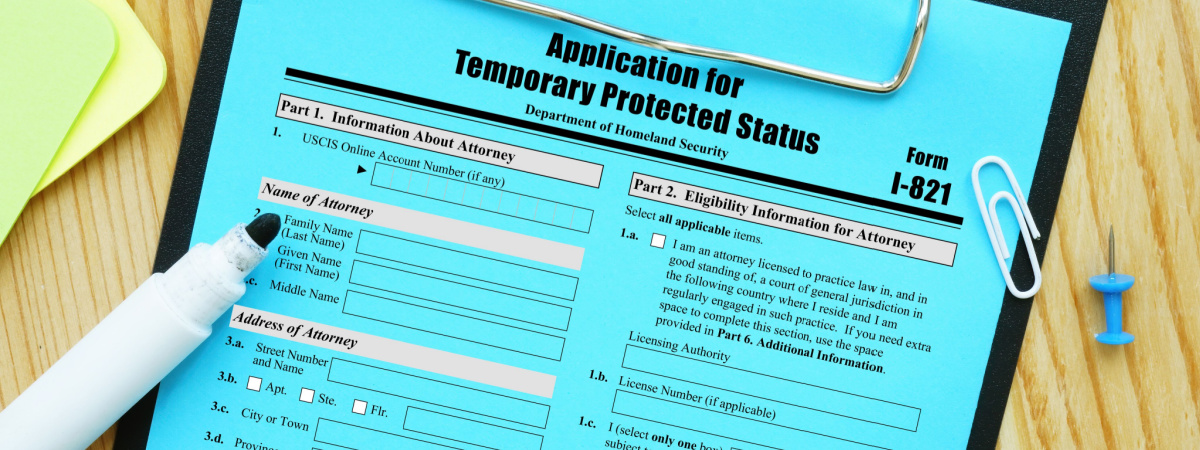
The Department of Homeland Security (DHS) has not issued formal determinations regarding the future of Temporary Protected Status (TPS) for Ukraine and Sudan, even though Oct. 19, 2026, was previously listed as the relevant expiration date for both designations. On Oct. 20, U.S. Citizenship and Immigration Services (USCIS) updated its TPS webpages to state that…

During myLawCLE’s webinar, Greenberg Traurig shareholders Kate Kalmykov and Cole Heyer will present Preparing for an ICE Inspection: I-9 Self-Audits and Attorney-Client Privilege on Wednesday, Sept. 30 from 2:30 – 3:30 p.m. ET.  This session will focus on conducting an I-9 self-audit under attorney-client privilege in today’s evolving enforcement environment. Attendees will gain practical guidance…

Recent legislative, regulatory, and litigation developments have affected TPS-related employment authorization, including changes to EAD validity periods and automatic extensions.…

Continue Reading TPS Work Authorization Update: How the One Big Beautiful Bill Act Shortens 540-Day EAD Extensions

The landscape for Temporary Protected Status (TPS) and humanitarian parole continues to change rapidly, creating uncertainty for hundreds of thousands of foreign nationals and posing significant compliance challenges for U.S. employers.…

Continue Reading TPS and Humanitarian Parole Landscape Continues to Shift: Key Updates for Employers and Foreign Nationals

On March 16, 2026, U.S. Immigration and Customs Enforcement updated its Form I-9 Inspection Fact Sheet, expanding the categories of errors classified as substantive violations and potentially increasing employer liability. The update also reduces the availability of corrective measures during a Form I-9 inspection.
Continue Reading ICE Updates Form I-9 Inspection Guidance, Expands Substantive Violations: Employer Considerations

The Department of Homeland Security (DHS) has announced a policy change impacting thousands of noncitizen workers and their employers across the United States. In an interim final rule released this week, DHS ended the practice of automatically extending employment authorization documents (EADs) for certain categories of applicants who file renewal requests.

Beginning Oct. 30, 2025…

Some individuals who live, study, or conduct business in the United States obtain an Individual Taxpayer Identification Number (ITIN) to comply with U.S. tax laws. However, a common misconception persists — that having an ITIN allows someone to work legally in the United States.

The truth is: an ITIN does not provide work authorization.

What

…

The E-Verify system is officially back online and will continue to remain online for the duration of the government shutdown; it may be time to catch up on any employment verification cases that were delayed during the outage.
Continue Reading E-Verify Is Back Online — Employer Considerations

The federal government shutdown is disrupting some immigration functions. Most significantly, the U.S. Department of Labor (DOL)’s FLAG system is down, preventing the filing of LCAs, prevailing wage requests, and PERM applications. While U.S. Citizenship and Immigration Services (USCIS) and the U.S. Department of State (DOS) remain operational due to fee-based funding, employers should prepare…

The Department of Homeland Security (DHS) has published its Spring 2025 Unified Regulatory Agenda, outlining changes to immigration policies and enforcement procedures that may affect U.S. employers and their workforces.
Continue Reading Spring 2025 DHS Regulatory Agenda: Immigration Policy Changes and Employer Considerations (Part 1)