U.S. consulates across India have begun cancelling and automatically rescheduling H-1B and H-4 visa appointments (often 90 to 120 days later) due to the new online presence and social media vetting rules taking effect Dec. 15, 2025. Although the Department of State (DOS) has not issued a formal announcement, all major posts, including Chennai, Hyderabad…

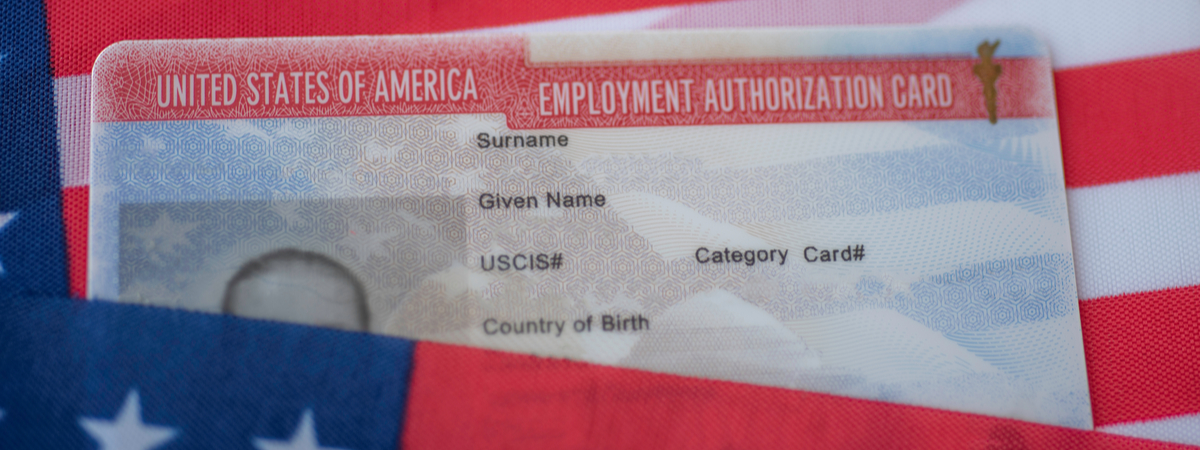
Due to an immigration application backlog, which was worsened by the pandemic’s adverse effects on USCIS and the nearly four-month office closure of Application Support Centers (ASCs) and Field Offices, the wait time for Employment Authorization Document (EAD) processing has been ranging anywhere from six to 12 months. This delay in processing has interrupted the…

Due to an immigration application backlog, which was worsened by the pandemic’s adverse effects on USCIS and the nearly four-month office closure of Application Support Centers (ASCs) and Field Offices, the wait time for Employment Authorization Document (EAD) processing has been ranging anywhere from six to 12 months. This delay in processing has interrupted the…

Late on Dec. 31, the Trump administration issued a proclamation that has the effect of extending the duration of two proclamations from 2020 that restricted immigrant and non-immigrant visa issuance at U.S. consulates and embassies worldwide. Proclamation 10014 of April 22, 2020, restricted issuance of immigrant visa for 60 days; Proclamation 10052 of June 22,…

On Aug. 12, 2020, the Department of State updated its guidance on the National Interest Exception (NIE) to the June 22 Presidential Proclamation 10052, which extends Presidential Proclamation 10014 through Dec. 31, 2020. Under this updated guidance, individuals subject to the Presidential Proclamations may seek to obtain an H or L visa if they are…

On July 16, 2020, the Department of State provided updated information on the availability of exceptions to the June 22 Presidential Proclamation 10052, which extends Proclamation 10014 through Dec. 31, 2020,.

Some travelers and visa applicants who are affected by the Proclamation may qualify for an exception if the purpose of their travel to the United States is for humanitarian reasons, public health response, or national security. Other exceptions include: (1) applicants who are subject to aging out of their current immigrant visa classification; (2) certain H and J visa applicants who are traveling to the United Sates to work in support of a critical U.S. foreign policy; and (3) dependents of applicants who are excepted from, or not subject to, the Proclamations.
Continue Reading Exceptions to Presidential Proclamations – Department of State Guidance

Twice a year, the Office of Management and Budget, in concert with the General Services Administration and its own Office of Information and Regulatory Affairs, publish the Unified Regulatory Agenda (Unified Agenda). The Unified Agenda is a transparency program that publishes federal agency rulemakings in process. It is not a process set in concrete but rather a snapshot in time to inform the public of rulemakings and regulations being developed by federal agencies.

The Department of Homeland Security (DHS) postings, released Nov. 21 for Fall 2019 are here. In addition to enabling the searching of regulations by agency and content, the agencies offer a regulatory “plan” which sets out regulatory principles. The DHS statement can be found here.
Continue Reading OMB Releases Fall 2019 Unified Regulatory Agenda; DHS & USCIS Expect Active Rulemakings

As an update (to this recent posting), we clarify that USCIS recently indicated in the Fall Unified Agenda the posting of a Notice of Proposed Rulemaking in November 2018 (see RIN 1615-AC15) on this regulation.

Please check back as this and other H-1B regulatory actions are anticipated in the near future.

U.S. Department of Homeland…